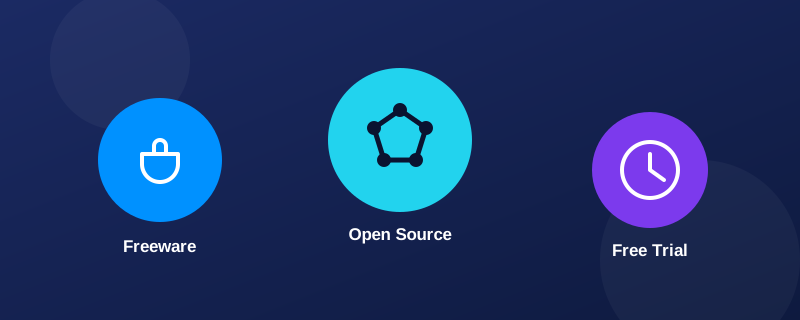
One word, three very different meanings
"Free" on a download page can mean at least three completely different things, and mixing them up is how people end up annoyed two weeks later when a program suddenly asks for a credit card. None of the three is better or worse across the board — they're just different deals, and it's worth knowing which one you're agreeing to before you install anything.
Freeware
Freeware is software you can use at no cost, indefinitely, but whose source code you generally can't see or modify. The developer keeps full control of how it's built and distributed; you just get to use the finished product for free. Most freeware makes money some other way — donations, a paid "pro" edition with extra features, or occasionally advertising inside the app itself.
The practical upside is that freeware is often more polished and beginner-friendly than open-source alternatives, since a single company or developer is steering the whole experience. The thing to watch for is exactly what we covered in our software safety guide — freeware you get from an official publisher site is a very different download than the same name pulled from a random aggregator.
Open source
Open-source software publishes its source code publicly under a licence that lets anyone inspect, modify, and usually redistribute it. In practice, the vast majority of open-source desktop software is also free of charge — but the "open" part is really about transparency and community control, not price specifically.
Because the code is public, security issues tend to surface and get patched faster, and there's no single company that can quietly discontinue the project or start charging overnight. The trade-off is that support is usually community-based rather than a phone line.
Free trial
A free trial is paid software wearing a free badge temporarily. You get full (or near-full) functionality for a fixed window — a week, a month, sometimes longer — after which it either stops working, drops into a limited "free tier," or starts nagging you to pay. This is completely legitimate and common for professional-grade tools that need to fund ongoing development, but it's a different promise than freeware or open source, and it should be labelled as one.
A fourth one people miss: freemium
Freemium sits between freeware and a trial: the core product is free forever, but advanced features sit behind a paid upgrade with no expiry pressure on the free tier. Unlike a trial, freemium software doesn't stop working — it just doesn't do everything the paid version does. It's worth telling apart from a trial because a freemium tool can be a perfectly good permanent free choice, while a trial by definition isn't meant to be.
Every listing says which type it is
We label freeware, open source, freemium and trial software plainly — before you download, not after.
Which one do you actually want?
If you want something you'll never be asked to pay for and don't care about seeing the source, freeware or freemium are usually the smoothest experience. If you care about transparency, longevity, or the ability to self-host and modify, open source is worth the (often small) extra learning curve. And if you're evaluating a professional tool before committing budget to it, a free trial is exactly the right category to be looking in — just calendar the end date.